Wrapper: Ecuadorian (Sancti Spíritus)
Binder: Nicaraguan
Filler: Nicaraguan
Size: 5.625 x 54 “LAT 54”
Body: Medium/Full
Price: $8.50
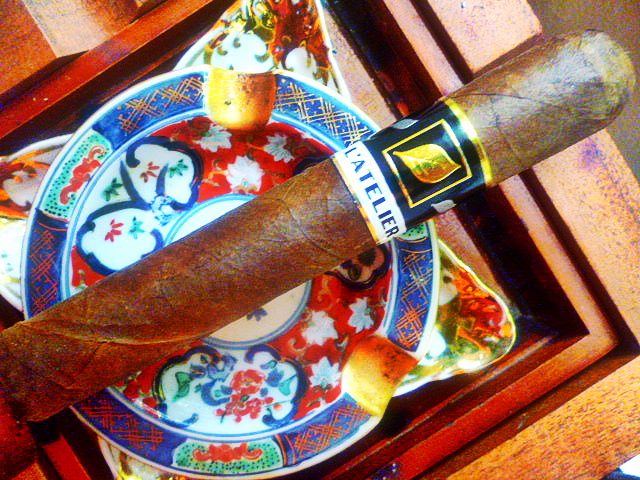
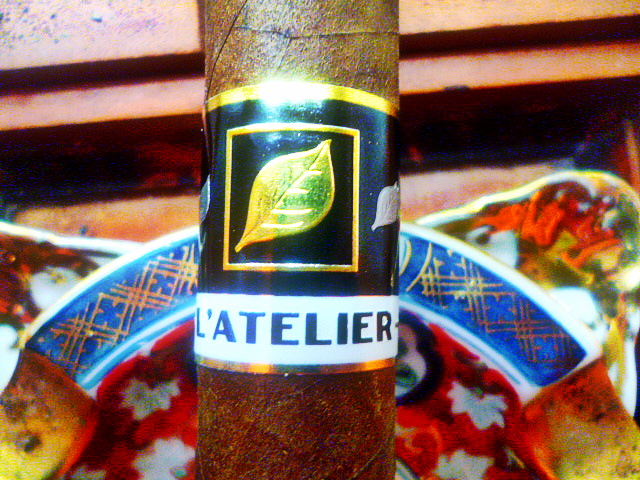
It seems I’m a little later to the party with this 2011 IPCPR Trade show cigar debut, but I have already reviewed it a couple times and I thought it would be prudent if I reviewed it on my current blog.
I am dead sure you have all smoked this fine cigar by Pete Johnson…and made at the My Father factory in Esteli, Nicaragua. This is technically, not a Tatuaje and lives on its own two feet with other blends being under the umbrella of this first offering.
The translation of the French word L’Atelier means “The Workshop.”
I find this very interesting that the wrapper is something very special. It was originally designed by the Olivas who were given it, as a gift, from the Garcias. It is a combo of Criollo and Pelo de Oro. This seed was meant as a replacement for the original Pelo de Oro due to its resistance to mold. Now if that ain’t sexy, I don’t know what is.
This stick is the most expensive of the line coming in at around $8 a stick. But it is a very good stick as we shall see.
Of course, the weathermen forecasted nice sunny weather for today, but instead, it is dreary and rainy. So much for my photos.
The cigar comes in four sizes:
LAT 46: 5.6 x 46, LAT52: 4 3/4 x 52, LAT54: 5 5/8 x 54, & LAT56: 6 1/2 x 56
This special cigar was a gift from a good friend who made sure I got a well-aged puppy. It has more than a year of humidor time, and I think, longer. I am curious to the effects of mellowing.
The wrapper is a medium brown with some huge veins and exposed seams. Part of the seam came loose near the foot and it required some cigar glue to fix it. So you might see some white residue. There is a bit of a nipple pig tail on top of the cap…which I believe is a triple cap.
The stick is solid with some give and it is very oily and fairly smooth.
I clip the cap to search for aromas…There are notes of spice, earth cedar, dried fruit and spice.
Time to light up…
The first puffs are some sweetness and earthiness. The draw is good but the char line is bit funky looking. And then the spice hits me like a pie in Soupy Sales’s face. I used to do a mean White Fang and Black Tooth impression.
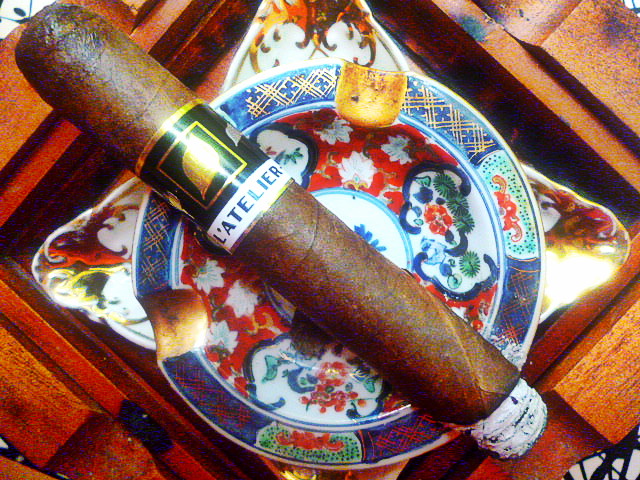
Right off the bat, flavors come pouring in. There is a nice vanilla component. A different type of chocolate that I cannot quite identify yet. There is also cedar and wood to complete the picture this early on.
And moments later, creaminess shows up. The creaminess and vanilla accent each other perfectly. The red pepper is on a slow climb to the top. It never stops increasing. Interesting because I expected a Garcia type blast; and instead, got a gradual growth of its power.
There is a nice nuttiness. Sort of a combination between raw cashew and hazelnut. Sweet nuts…like me.
Only an inch in and this one year+ cigar is not showing any sense of muted flavors; in fact, it seems as the aging time only brought out the flavors in larger strengths than if you aged it a month or two.
The ash is hanging tough.
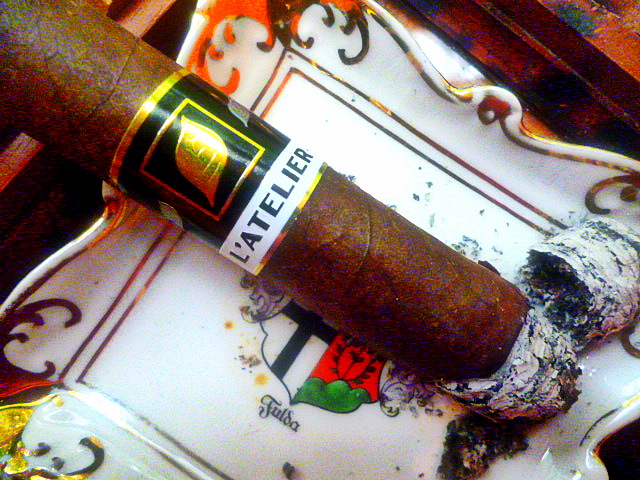
Halfway through the first third, this is a flavor bomb. I don’t remember this from earlier reviews. A zesty citrus enters the picture. Very tart. But tasty..nice counter point to the sweetness, creaminess and sweet nuts.
As the first third ends, the char line has corrected itself without my help. The cigar becomes complex. The flavors begin to form as one with the exception of creaminess and spice. Surprisingly, I don’t taste much cocoa at all. There are so many flavors floating about that the cocoa is muted now. Its special quality seems to have vanished. And lives in the background. Considering how much of this cigar is Nicaraguan, it is baffling. My guess? The extensive humidor aging.
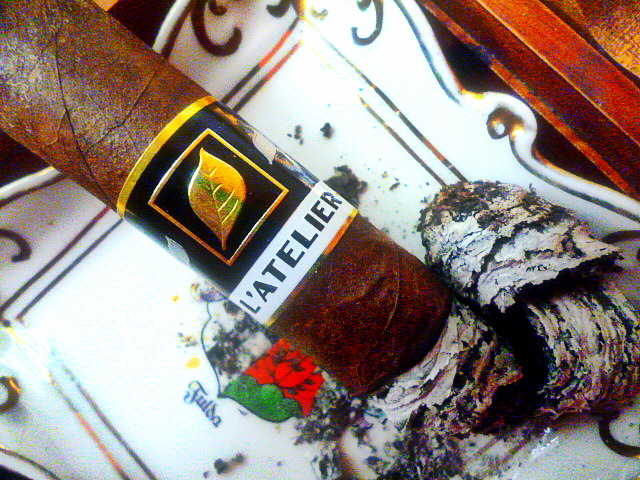
I hit the halfway point and the cigar is meaty but not much has changed. It doesn’t need change. It is just perfect the way it is. The complexity grows and the flavors are one. This is an extremely pleasurable cigar.
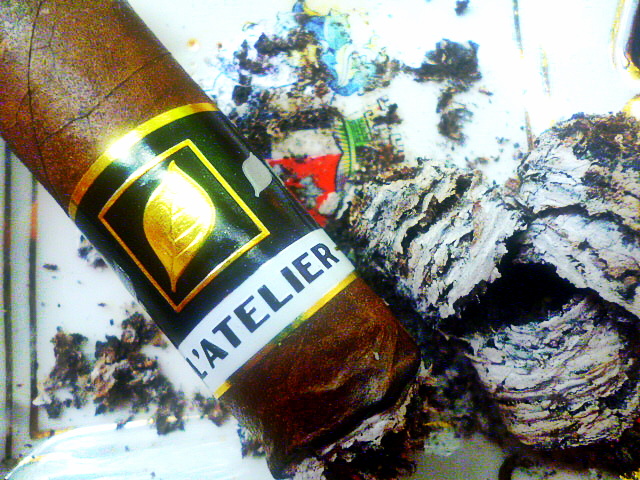
I start the last third and the cigar is singing to me. The flavors have changed from muted to explosive. The cocoa has returned in spades. It is sort of a mocha java now. A slight coffee influence was there all along. The dried fruit is now apparent as raisin with honey overtones. This cigar has been perfectly balanced for a long time. This is a spoiler cigar. Meaning that it spoils you for other blends. It is blended with such love that kudos to Pete Johnson.
The strength has remained medium up til now. It begins to move towards full bodied. I feel the nicotine now. Spirits begin to dance before me.
Time to remove the band it comes off easily.
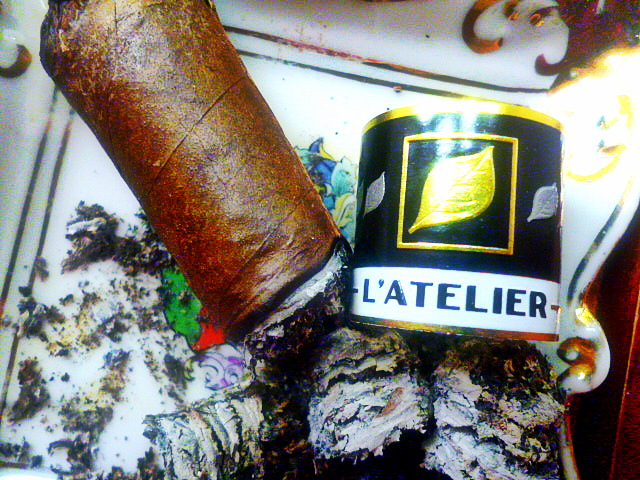
The last couple inches sees the flavors hit my palate like a sledge hammer. The red pepper is in full force now. Throughout the cigar, the spiciness has been more of a background flavor. No longer. It is pumping out potency. Yet, it doesn’t mask the other flavors.
With a couple inches to go, the power is full on. My eyes get a bit blurry.
The stick finishes up in style. A delightful experience. I have reviewed the L’Atelier Selection Speciale. Here is the link: https://kohnhed.com/2013/04/01/cigar-review-latelier-selection-speciale/
And now for something completely different:
A Primer on Producing Artists.
I owned a recording studio in Long Beach, CA back in the early 80’s. It was all analog back then. We used a giant recording machine that used 3” tape. And expensive tape it was. I would have to travel to Hollywood to buy a few reels of this tape which cost around $100 a reel. That was a lot back then.
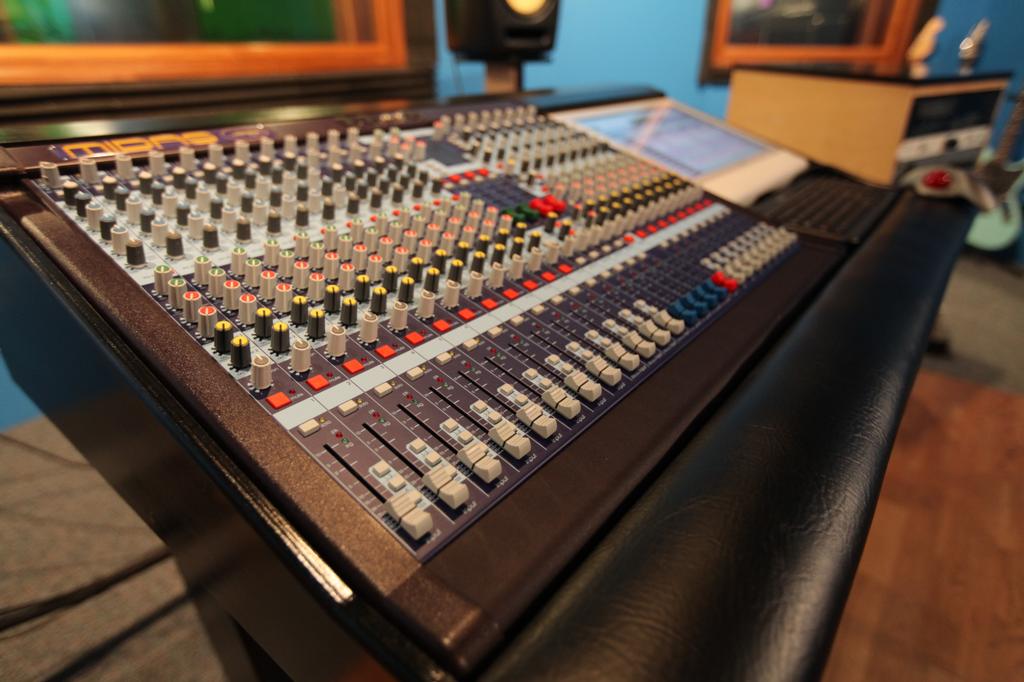
Now the machine, like most reel to reel tape recorders, had two speeds: 15 IPS and 30 IPS. Your sound is greatly increased at a faster speed. But it used up the tape in a blink of an eye. For groups coming into record, we gave them the option, but let them know if they wanted the faster speed, they had to pony up extra dough. About half the groups wanted the original 3” tape and we would sell it to them at around 200% mark up. I hated this because it meant more trips to Hollywood. We eventually got discounts on recording gear from this one store because of our frequency.
And strangely, in a town of more than 500,000 people, we were only one of two studios in the city. And the other studio was a dump. So we got a lot of business. Plus we advertised every week in those counter culture newspapers. We would always buy the entire back page.
I had a partner who did the engineering while I produced the session. I was able to work the 24 track board perfectly but I needed to focus on what was being recorded and help the artists get their best performance possible.
I had a great mentor, Rick Tunstall, who taught me everything about producing. And as a result, I was very good…I would get taken aside by a singer or a guitarist and told that no one had been able to get a performance out of them like I did. This made me very happy. It didn’t matter if I liked their music; I wanted a fine product coming from our studio. Word of mouth was a big deal for us.
Over the years, I produced thousands of groups…all kinds…you name it..from punk bands to an orchestral harp player.
We also got a lot of radio commercial work and I never got involved because it was usually a radio DJ with a project and they deemed themselves the producer. And didn’t want my help; although, after hearing their finished project, I believe they would have been smarter taking my help.
And then there were the pop or rock acts that thought they were smarter than me and insisted on producing. Every single time, it was a disaster. My partner, and engineer, Dave, kept his mouth shut and let them dig their own grave. It would usually end up with more money for us because they would end up re-doing the session. After they finished their debacle, I would play them things I produced and they, begrudgingly, agreed to allow me to produce their project. And everyone was happy at the end. Back then, we only charged $35 an hour.
Often, I would have to use the Phil Spector method. Something Tunstall taught me. This means getting rough with one or more musicians who weren’t on top of their game. Recording is nothing like playing live where playing a clam now and again didn’t matter. In a recording session, one had to discipline themselves so they could play the exact same thing over and over again, if necessary. Some of the best players around choked in the studio. They couldn’t handle the pressure. It is very intimidating being the only person in the studio while a gaggle of people looked on from the booth. More often than not, I had to bring in player buddies who knew how to record. This really caused a lot if ill feeling in the band. But they wanted a great finished product so they conceded.
There were times, frustration came into play. I would enter the recording studio, leaving the booth. This always intimidated the players. I would take one aside and yell at him with a big pep talk. But I was yelling. I got them mad. Mad is good. It fires up the adrenaline and with enough pep talks, the players came through, playing what they were supposed to, plus more. I tried easy cajoling first, but sometimes getting rough was the only way. And it was their money and I wanted them to get the most out of it.
After the session, the band would be packing up and Dave and I would focus on one song. We would hurriedly mix it so we would have something to show the players when they finished packing and entered the booth. They always wanted to produce their songs. But by doing one song for them, it kept the number of self-proclaimed producers down. Most of the time, they were very impressed with what Dave and I did for them and allowed us to mix their tunes by ourselves. We would shuffle them out of the studio and then mix their songs. Then, invite them back the next day to hear the finished product. We saw a lot of big smiles.
There were no DVD’s back then so the finished product was delivered on a two track reel. Basically, it was a stereo recording of their music. By doing that, we got to keep the 3” reel and still charge them for it. Giving them a bunch of BS about how we have to ditch it after using it for them. We were ruthless. The bands would then have to transfer the reel to cassettes or have them pressed into vinyl.
My ear was the best it ever was in all of my playing days. The amount of focus required hearing every detail, and nuance, of a song takes a lot.
As a result, I got hired out to do bands’ sound for a live show. We would use their equipment and all I had to do was show up. I sat behind the board and did a sound check with them getting all their sounds.
I had a real knack for getting a big drum sound. I aimed at a John Bonham sound. BIG! The bands really liked that. And of course, as a bassist myself, I made sure the bass was way out front.
I miss those days. But life moves on and technology changed drastically only a few years later.
So while the bedroom guitarist could produce something equally as good as my studio could, the only thing lacking was the Phil Spector syndrome telling them they can do better.

Discover more from Cigar Reviews by the Katman
Subscribe to get the latest posts sent to your email.
Categories: CIGAR REVIEWS

Katman at your disposal...I'd love to know what you think.