Wrapper: Mexican Maduro
Binder: Nicaraguan
Filler: Nicaraguan
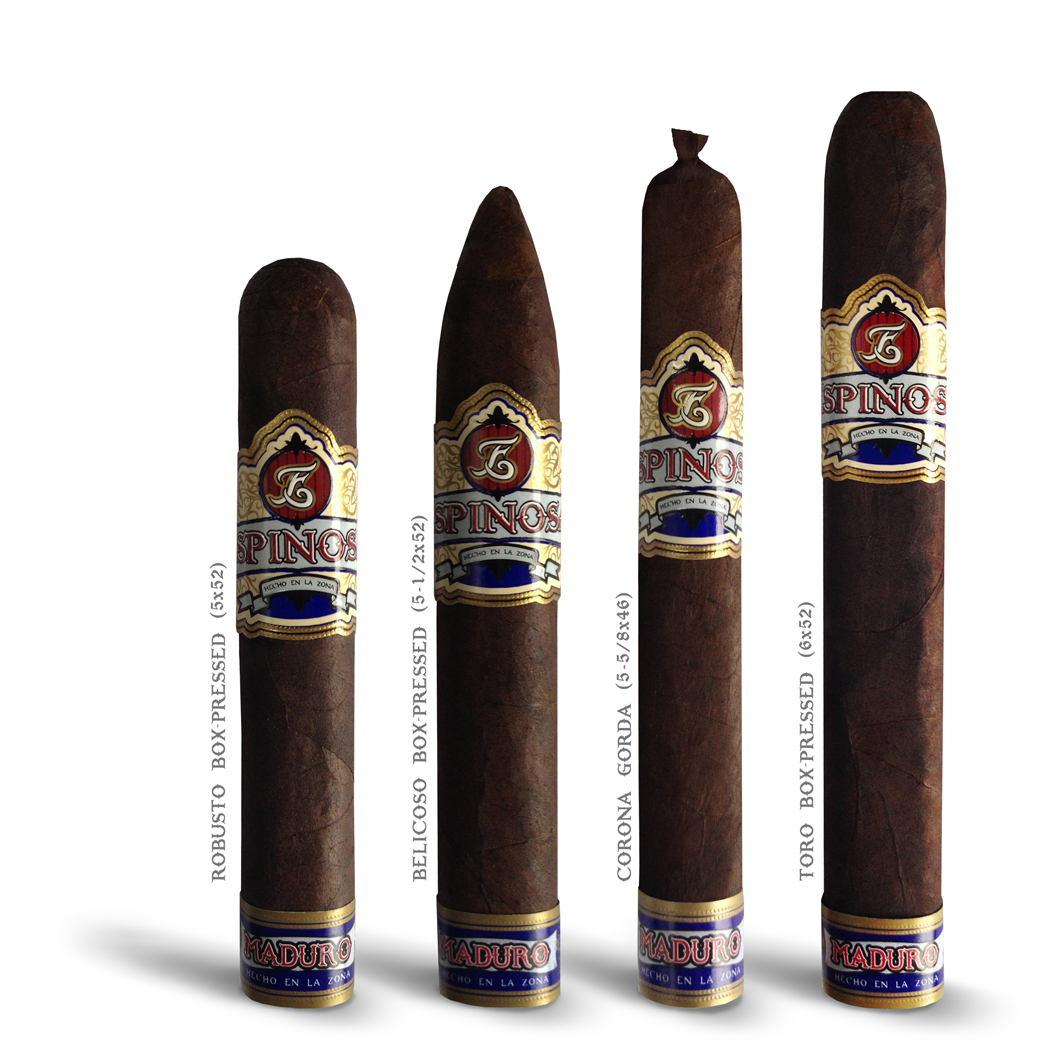
Size: 5.625 x 46 “Corona Gorda”
Body: Medium/Full
Price: $7.00
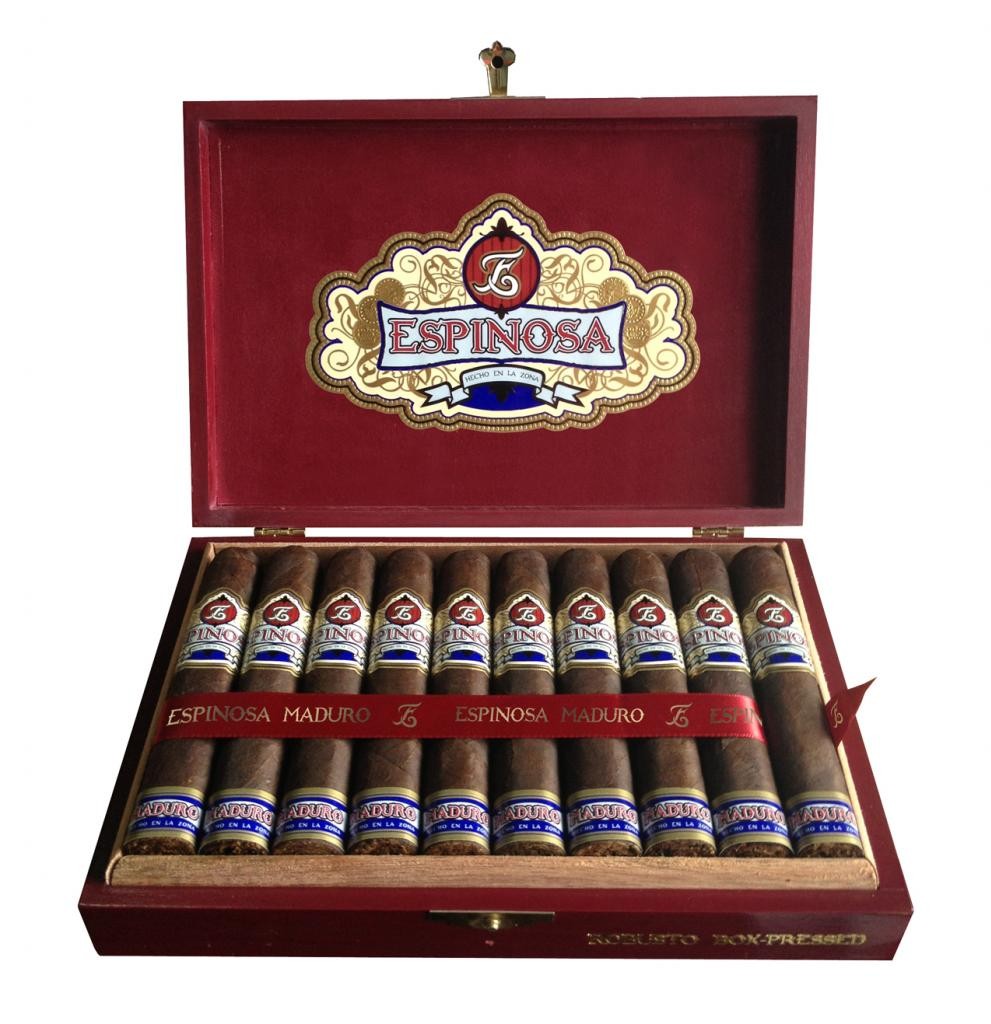
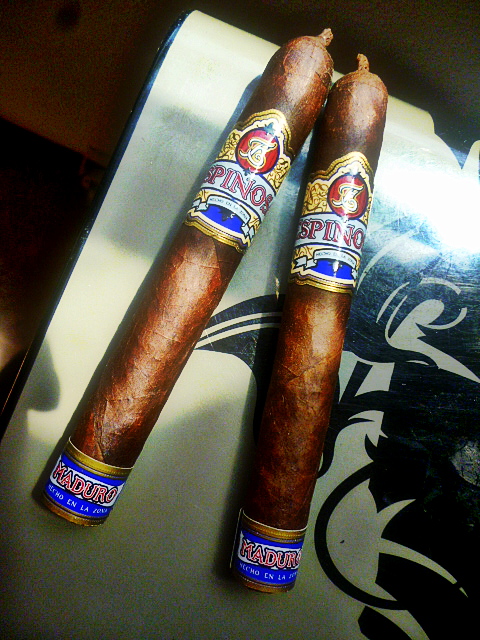
Erik Espinosa’s successful Habano cigar was reviewed here back in November of last year. A great cigar.
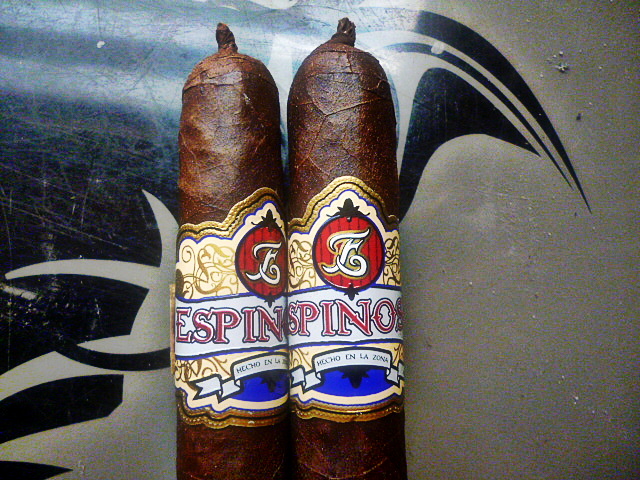
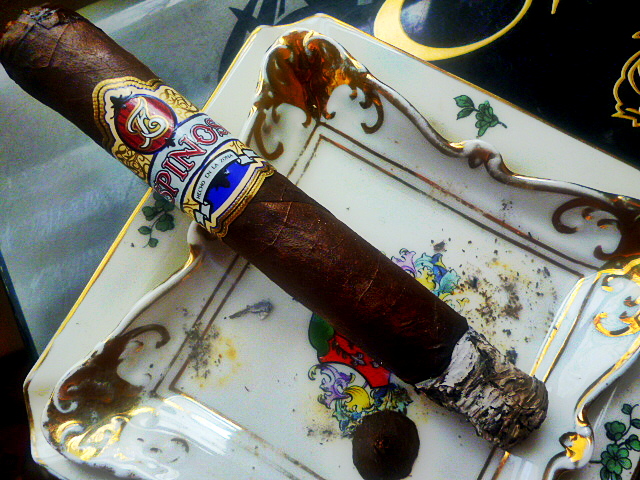
His follow up is the Maduro. It has a very dark Mexican wrapper with a slight rustic appearance. There is a triple cap and a nice pigtail.
The cigar is so new that it is missing from Espinosa’s web site. So with very little information about this cigar, here goes….
First, I like that within the four sizes, there is a corona. For some reason, a corona is a great size for huge flavor. I also have the box pressed 5 x 52 which is probably also a flavor bomb.
The stick is extremely solid. Packed full.
The aromas coming from the wrapper are muted. The most apparent is the cocoa. There is earthiness, cedar, and spice and a bit of sweetness.
I carefully use a guillotine cutter to remove it yarmulke style; taking off the wrapper but not the tobacco underneath. Sort of like scalping.
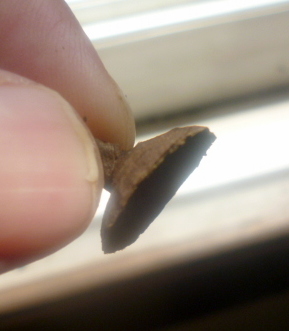
I light ‘er up.
The first puffs provide something sweet. And cocoa. And spice. Very earthy. And a bit of cedar. The draw, in spite of the cigar being so solid, is perfect. The burn line is perfect.
All of a sudden, the pepper ramps up. The Nic leaves are providing most of the flavor but the Mexican wrapper adds the sweetness and earthiness.
This is a slow burning stick. I expect this corona to take a full hour to smoke. Maybe longer. The burn line is a bit erratic but I think it will fall into line by itself.
Compared to the Habano version, this cigar is richer with more depth. Plus, I prefer Maduro to Habano. The body starts out medium. The corona is a great yardstick for the rest of the sizes.
At the 1” mark, flavors are finding their place in the world. They are slowly building. The pepper is building as well.
The Habano is about a buck cheaper than the maduro.
The burn line self corrects. The cocoa and sweetness move ahead of the pack. The cigar becomes very spicy as the first third ends.
And it is here, the sweet spot begins. The sweetness tastes like buttery caramel now. I wasn’t expecting it.
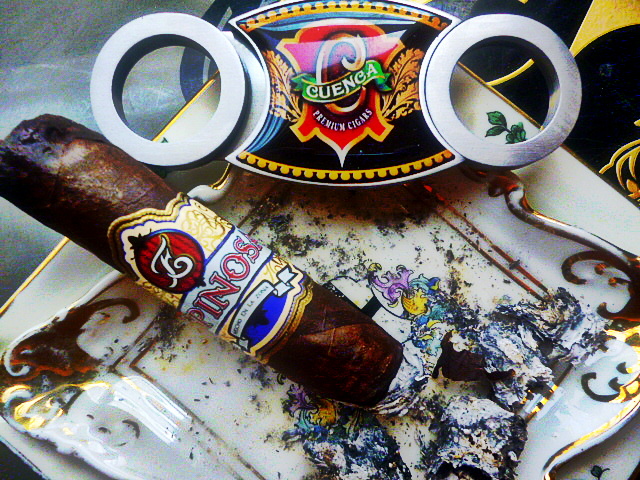
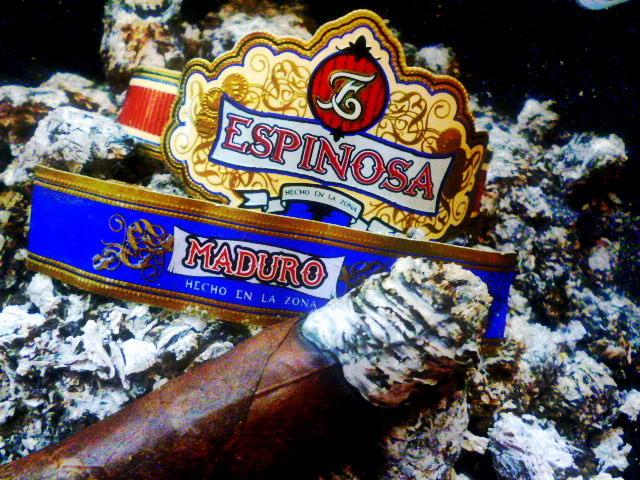
The corona is making me nuts because of its size and the fact that it appears the band size was not regulated to meet the smaller girth; so I can’t get a photo with the entire Espinosa name on it. It basically wraps around most of the cigar. So my photos show you this is a “Nosa” cigar. LOL.
The cap is doing nicely and not allowing tiny bits of tobacco to get loose. The construction of the cap is almost as important as the construction of the entire cigar. Nothing can ruin the experience more than a sloppy cap. I’ve had to snip off a chunk of cap with scissors to more cigars than I care to mention.
I hit the halfway mark and the cigar is showing off its flavor profile. The cigar is becoming all about cocoa and sweetness. Ancillary flavors, like cedar, are in the background.
This has turned out to be a very nice cigar. It isn’t a giant among cigars, but it is very good. Of course, I am saying this before I get past the halfway point and into the last third. Strange things can happen in that last third.
I find myself still annoyed at some reviewer who dissed other reviewers for describing the sticks like candy bars. While this cigar is too earthy to be considered a “candy bar,” the flavor is the flavor. Why a cigar gets notes of cocoa, coffee, creaminess, sweetness…I have no idea. And I’ve never read a reasonable explanation of why these flavors are emitted from aged cigar tobacco leaves. How does the fermentation process affect these flavors? I have no idea. If you’re smarter than me, and who isn’t; then please leave a comment explaining why these flavors are so common; especially in Nicaraguan leaves.
It’s been a good 40 minutes and I’m just starting the last third. I think that Espinosa is on to something with his mindset about blending. Of course, he was co-producer of the 601 line of cigars so he is no stranger to diversity; but with his own line, he is branching out. I have no idea of how the partnership worked between him and Eddie Ortega, but it feels like a Lennon/McCartney relationship. Now that they are on their own, their personalities are coming out in their blends. I would never even think of saying who is who in my analogy. It could start a war. But my premise is solid as most of us have smoked both men’s blends over the last year or so.
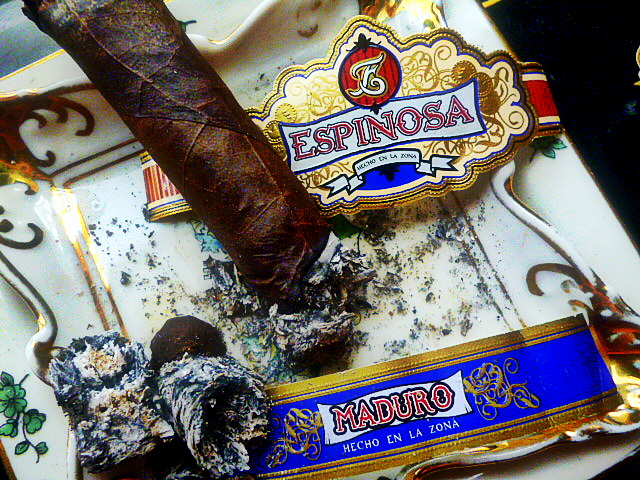
The last third shines. Such deep, rich flavors now. Complexity is the name of the game. I plan to purchase a box of these in the near future and let them sleep the sleep of the fish. I want to see what the blend is like with months of aging on them.
I am just kicking back enjoying the cigar and I would like to take this moment to thank the wonderful Ana Cuenca for supplying me samples of these cigars. She is such a nice lady. I should adopt her.
You can purchase Espinosa Maduros, and a whole lot more, at Cuenca Cigars. Here is the link: http://www.cuencacigars.com/
And if you dig the cutter: http://www.cuencacigars.com/cuenca-5-anniversary-cigar-cutter/
The char line is pretty funky now. I have to tweak it a bit. I want it purty for the photos.
Creaminess shows up now confirming I hit the sweet spot in the last third. It ramps up the caramel. And strings along the cocoa behind it.
It is at this point that the body moves to full. I can feel it in my stomach and head.
As I come close to finishing the cigar, I have to say that I am very pleased with the blend. The cigar revolves around its deep earthiness…which must come from the wrapper. During the last third, the cigar becomes a nice flavor bomb making it the proverbial “candy bar.” But I like candy bars. I also like that, while I cannot confirm this, the tobacco leaves were nicely aged before becoming cigars. As I have not allowed the cigar to sit for a few months, the aging process comes through.
Thanks again to Ana. This was a real treat.
Discover more from
Subscribe to get the latest posts sent to your email.
Categories: CIGAR REVIEWS

One thing I’ve heard about Nicaraguan tobacco is that it is grown on a very fertile soil content which was originally volcanic in nature and then coffee fields were grown on top of that then followed by cigar tobacco. Volcanic soil in nature is what leads to the spicy notes and the coffee undertones come from when it used to be a coffee field. A lot of South American and Dominican Republic tobacco growers have sought out coffee fields to grow on because they were trying to stick to old Cuban customs to achieve and expand on what Cuba was known for. I don’t know how true it is but it does make a bit of sense! LOL
LikeLike