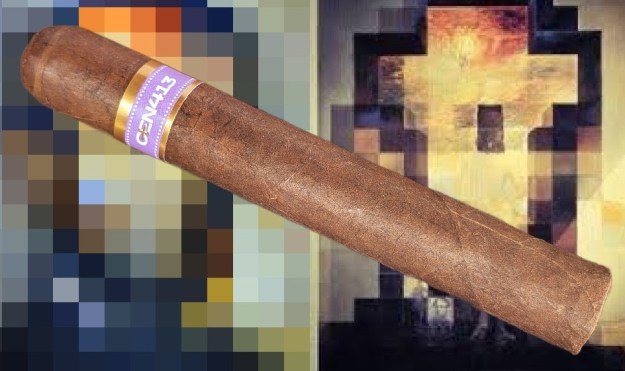
Wrapper: San Andrés (Mexico)
Binder: Habano–Ecuador Broadleaf
Filler: Nicaragua (Ometepe, Condega, Pueblo Nuevo, Chincagre)
Size: Toro (6 x 52)
Strength: Medium–Medium+
Price: ~$13.00 (varies by retailer)
Date Released: April 13 (GEN 4/13 designation tied to shipping date)
Factory: Luciano Cigars Factory (Estelí, Nicaragua) / Luciano Meirelles
I’ve smoked this cigar a few times since it was released, and every time I walked away with an unsettled feeling—not negative, just unresolved. It always felt like the cigar was trying to express something I couldn’t quite catch. I liked it, but I couldn’t explain why. So when I picked up a couple of sticks specifically to review, I set out to finally understand what it was doing.
It took two cigars to get there.
After finishing the first, I had the same reaction I’d had every time before. I actually said it out loud: “What the hell did I just smoke?” It didn’t behave like anything I’ve had from Definition—or anything else, for that matter. No familiar pattern. No obvious direction. Nothing to grab onto. It felt… interpretive. Like staring at a piece of surrealist art where you have to decide what you’re looking at.
The second cigar left me just as confused. This time, though, I took copious notes—trying to pin down what I was actually experiencing. Afterward, I did what I should have done from the beginning: I did some research. In the process, I came across a line from the press release. The cigar was described as being “designed to prompt smokers to question the root of their identity, their beliefs, and connection to the beginning of what defines them and how they define what they encounter in life.”
After reading that, everything seemed to crystallize. The confusion. The frustration. The doubt. It all became clear. I felt like David Bowman at the end of 2010: The Year We Make Contact—when he turns to Dr. Floyd and says:
“It all makes sense now.”
Not because the cigar had suddenly changed, but because I finally knew how to look at it.
Prelight, the wrapper gives off barnyard, oak, and a faint, indistinct fruitiness—something in the realm of dried apricot, but not clearly defined. It’s familiar, but blurred. The cold draw follows the same path: wood, umami, dried fruit. Recognizable elements, but nothing resolves. Nothing declares itself.
On ignition, the profile tightens slightly. Charred oak and tannins lead, backed by malt and a featherlight cayenne. There’s a subtle sweetness, but it feels structural—present without drawing attention to itself. Even here, nothing quite comes into focus.
As the cigar establishes itself, a core begins to form. Mushroom-like umami, earth, flinty minerality, and that same quiet sweetness sit at the center. The strength holds at a composed medium, with no sharp edges. Everything feels balanced and deliberate. But the identity still isn’t there, I find myself asking, What am I looking at?
Then, about an inch in, something shifts—not in flavor, but in orientation. The cigar feels grounded, rooted in earth, but without weight. There’s depth, but no gravity. It doesn’t pull downward. It just… holds.
As the cigar settles in, small details begin to flicker in and out—light coffee, cedar, a touch of sweetness, occasional flashes of cayenne, even something reminiscent of caraway seed. The smoke softens slightly, taking on a faint creaminess, but never drifting into anything familiar or expected. The core still doesn’t move. It stays anchored in earth, umami, and minerality.
And then I hit a transition. It’s subtle and barely noticeable. But I sense the shift.
The finish cleans up and becomes more distinct. What was once muted becomes clearer—flint, oak, umami, sweetness—all resolving into more clarity. The cayenne steps forward slightly, adding just enough light to the darker tones. The umami shifts, taking on a richer, more expressive character akin to gorgonzola cheese. Around it, new details begin to separate from the background—something toasted, something bread-like, a faint bitterness that feels mineral rather than harsh, deeper notes that suggest charred wood and subtle fermentation.
Nothing new is being added.
Maybe it’s because I’ve had music on my mind, but the transition feels like a suspended fourth resolving to a major third—the tension releases, and everything lines up.
By the halfway mark, everything feels present. The spice asserts itself more clearly. The bread-like quality lingers. The sweetness pulls back, becoming more atmospheric than structural. There’s a sense that the profile is complete—that the cigar has shown me all it’s going to show me.
It’s hard to describe because I feel it more than I can see it. The sensation is almost ethereal, weightless.
But instead of asking, Is that it?—I find myself drawn in.
And then it becomes obvious:
The cigar hasn’t changed.
My perspective has.
In the home stretch, the cigar still doesn’t build. It converges and clarifies even more. Sweetness becomes more defined, taking on a caramel-like clarity with hints of vanilla. Floral notes drift in and out. Cedar moves forward with more authority. The umami circles back, returning to a more grounded, mushroom-like expression. Coffee begins to attach itself more firmly to the core as the minerality recedes slightly into the background. The earth dries out just a bit, losing some of its earlier richness.
Cayenne becomes the only element that consistently increases, gradually strengthening as the cigar approaches its end. The strength itself barely moves. Everything else simply becomes clearer.
Once I finished the cigar, I thought to myself that if all I did was flavor-note accounting of this cigar, I’d dismiss it on the grounds of it not being complex enough and accuse it of lacking identity. But that would’ve missed the point.
It has an identity, but it reveals it slowly—and only if you’re willing to move with it.
There’s indeed less here in terms of outright expression than I might expect. But as the cigar progresses, unlike anything I’ve smoked, its identity isn’t built from flavors—it’s revealed through clarity.
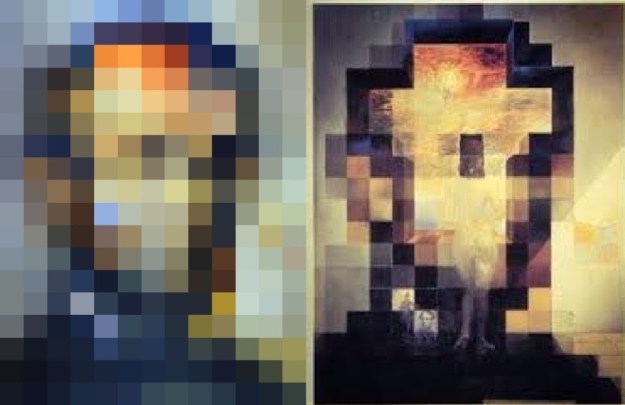
It reminds me of Salvador Dalí’s Abraham Lincoln in Dalivision. From a distance, it appears as a super-pixelated form of Abraham Lincoln. But move closer, and the details snap into focus.
The image didn’t change.
Your perspective did.
The same thing happens here. The cigar never changed—I just learned how to see it.
And maybe that’s what it was asking all along—not to be defined, but to make me question how I define what I’m experiencing in the first place.
Total smoke time: 1:40
Rating: 95
Katman here: Non sponsor Luxury Cigar Club has a solid deal for you on their catalog of 14 different Definition blends. Use promo code KATMAN15 for 15% off.
If you would like to read more from Brendan Delumpa, go to Unco B’s Stogie Diary.
Discover more from
Subscribe to get the latest posts sent to your email.
Categories: CIGAR REVIEWS

Katman at your disposal...I'd love to know what you think.